Latest Post

If you send any one of us from the office to get our nails done—except Social Media Editor Abigail, who defies nature and always has OPI Lisbon Wants Moor on her nails—we’re going to be debating our color choice for so long you’d think we were debating our child’s name. And if we have to choose a color for both our fingers and toes? We won’t see you until next week.

While getting a matching mani-pedi is always acceptable, sometimes it’s fun to have a complimentary combo instead—especially once we break out our sandals come spring. But once you get into bolder colors, how are you supposed to know which mismatched colors go together, and which just … don’t match?

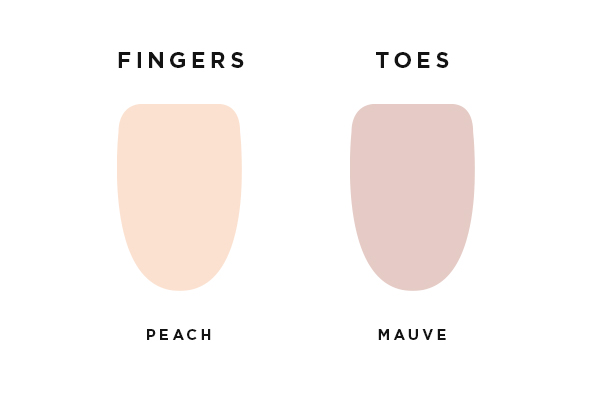
We’ve created this nifty guide to the hottest nail colors for spring, and which to pair them with for the ultimate mani-pedi—it’s like color-blocking for your nails.


The post The Spring Nail Combos for Your Toes and Fingers appeared first on The Everygirl.

It might come as a huge surprise, but I was a pageant kid when I was 5 years old. My grandmother hand-sewed all of my outfits (even making outfits to match my dolls), my mom put foam curlers in my hair the night before every pageant, and my cousin—bless her—did her best to teach a clumsy child to walk a runway. Luckily as I got more into pageants, I also started doing a little child modeling. To no one’s surprise, my favorite part was always the makeup. And I wasn’t all about the natural look either. The second my mom put some mascara on me, I had to have more. Next thing I knew, I was going full-Euphoria every chance I got. While my mom let me have at it with her makeup drawer, the bridal company that wanted me to dress up like a flower girl wasn’t happy to see my eyes smothered in neon pink craft glitter. (Shoutout again to Euphoria’s makeup artists for making this look now trendy AF—except with better glitter.)

I like to think it was my creative, artistic soul that drew me away from modeling instead of having to go to kindergarten, but I digress. My childhood modeling taught me about makeup quite early, but it wasn’t until I started working at The Everygirl that I had to think about makeup that would look even better in a photograph than it would in person. I officially have a year of photoshoots behind me, and I’ve learned a lot about what looks good in pictures versus what will never make it anywhere other than the trash folder on our photographer’s computer.


1. Medium-Coverage Foundation

You want a full-coverage, thick foundation for photos because it covers everything, right? Not exactly. Instead, opt for a medium or buildable-coverage foundation that covers what you need it to without looking like a mask on the skin. You want something that will provide a natural or radiant/satin finish rather than something that looks too matte. Intense matte skin in photographs is a dead giveaway that you’re wearing a heavy foundation in photos, whereas a more natural glow will blend in with the rest of your body. Don’t go too heavy on the glow though; keep the areas that tend to get shiny—such as the sides of the nose and the center of the forehead—at bay with a little bit of powder.

To really give a skin-like finish, mix your foundation with a little bit of your moisturizer or primer to slightly sheer it out. More hydration, less coverage—win, win.

Anastasia Beverly Hills

Luminous Foundation

Giorgi Armani Beauty

Luminous Silk Foundation

Trust us: this one is wedding-day-worthy.


2. Color Corrector

In the same vein as limiting coverage, using a color correcting concealer under your foundation limits how much you’ll have to use to cover anything you don’t want to be seen in photos. Following the color wheel, green masks redness (great for blemishes or rosacea on the nose), purple masks brown/yellow tones (such as melasma or sun spots), and yellow/peach/orange masks blue/purple tones (AKA those pesky dark circles). You can also use a yellow/peach corrector on blemishes too, and it’s significantly easier to cover up, so if you’re new to color correctors, I’d recommend starting with that first. 

Use a small concealer brush to dot the color corrector in the spot you’re trying to conceal before you apply foundation and then pat it around with your finger to blend. Color correctors work best when you apply your foundation with a beauty sponge because it doesn’t move the concealer around like a brush might!

Urban Decay

Naked Skin Color Correcting Fluid

available in four color correcting shades


3. Liquid Highlighter

If you’ve ever seen a celebrity on the red carpet or a makeup artist’s Instagram page, glowy skin is it. You can’t argue that glowy skin trumps matte, dry, cakey skin in any photograph. To get the look, add a liquid illuminator under your foundation or on top as a highlighter. You can go over the look with a powder, but you’ll want to make sure it’s something that doesn’t add or emphasize texture, as you’ll be able to see that even more in photos.

Jouer Cosmetics

Powder Highlighter

The beauty product I've gotten the most compliments on ever!


4. Voluminous Hair

Looking good in photos includes your hair routine too! Regardless of the style you go for (natural, straight, curly, messy—seriously, whatever!), amping up the volume is important for photographs. Not only does it make your hair look thicker and fuller, but it will fall throughout the day naturally rather than getting oily or flat.


5. Shimmery Eyeshadow

Adding a shimmery shade to your eyelids will open up the eyes and make them reflect in photos, whether there is flash or not. Focus the shimmer in the center to inner corner of the eyes, highlighting the inner corner and brow bone with the lightest shade. This brings attention to your eyes while still keeping these bright and light. Finish with mascara and smudge a little bit of a darker shadow on the lower lashline for some extra definition.

Charlotte Tilbury

Luxury Eyeshadow Palette

available in 12 colorways

Fenty Beauty

Snap Shadows Mix & Match Eyeshadow Palette

available in 8 colorways


6. Light Bronzer

Although we didn’t use a heavy, full-coverage foundation, your skin is still probably lacking a little color and dimension. You don’t need a full contour and highlight situation to get a good sculpt; instead, add a light bronzer in the “3-E” placement (on the top of the forehead, under the cheekbones, and below the jawline) and blend it into the foundation. For a special photoshoot where you need makeup to last for a long time or under artificial light, use a cream bronzer and then set it in place with a powder version.

Vita Liberata

Trystal Mineral Self-Tanning Mineral Bronzer

Super cool product alert: this bronzer has a self-tanner built in, so you'll look glowy even after you take it off. Also, it's clean. Obsessed much?


7. Lip Gloss

Aside from lip gloss having a moment in the beauty world right now (bye-bye, matte, dry lips!), a sheer, glossy lip with a little color will always look the best in photos. It looks youthful and glowy, and it’s pretty much impossible to make it look heavy. Whether you go for a natural, clear gloss or opt for something with a hint of color (good for headshots!), choose something fine shimmer instead of glitter because it won’t emphasize dryness.

The post No Filter Needed: The Most Photogenic Beauty Products appeared first on The Everygirl.

There was a time that a “skincare routine” consisted of Cetaphil face wash, Pond’s skin cream, and St. Ives Apricot Scrub for a little maintenance in between. 

But modern reality is far from that—with access to acids and retinoids and peptides that at one point only a doctor could prescribe us, the skincare industry can be a bit overwhelming, to say the least. And while it’s easier than ever to get products that will help your skin, it’s also easier than ever to get sucked into a routine with too many products that end up doing the opposite of what you want: leaving you with dry, flaky, irritated skin.

At the end of the day, no amount of googling or filling your Sephora basket can improve your skin like a dermatologist can, which is why we turned to some of the best in business to share some expertise. Here, they spill the most detrimental skincare mistakes they see their patients making (many of which I was surprised by and extremely guilty of) and how to improve your skin if they’ve already happened. (Bonus: they also shared some of the products they swear by for their own skin—some of which you can get on your next Target run).


Dr. Tiffany Jow Libby, MD, FAAD, FACMS

Source: @dermdoclibby


Doing too much

… ie. having a freak-out moment and using every product they have on their faces. We’ve all been there—when you get a crop of acne breakouts or irritation on your skin, and you frantically throw the kitchen sink on your face. Don’t do it! Your skin is already irritated and ‘angry,’ and the last thing you want to do in this scenario is to further irritate it. I recommend patients to go the other way, and taper back what they are using on their skin—go simple, use gentle cleansers like Cetaphil Gentle Skin Cleanser and moisturizers like Neutrogena Hydroboost or La Roche-Posay Double Repair Cream. Do this for a week and let your skin regain its balance. It will thank you.


Not washing your skin before going to bed

Cleansing your skin is important! We are exposed to so much dirt and pollution, and by the end of the day, we need to wash off the makeup, debris, and environmental pollutants that are sitting on our skin. I recommend cleansing twice daily and after sweating/exercise. The key is not drying out or stripping your skin of important oils by over-cleansing, but finding the right balance for your skin to maintain skin health and a bright complexion.


Waiting too long to see a dermatologist

We as dermatologists are the skin experts, and we’re here to help. Too often, I will see patients who have waited until their acne has left scars or a cosmetic concern has worsened to now require more aggressive treatment—or more seriously when a growth has become cancerous. As a dermatologist and skin cancer surgeon, I want to help you address these issues, and at the very least, tell you that it is benign and something not to worry about. 


Dr. Fatima Fahs, MD

Source: @dermy_doctor


Ignoring your neck

One of the most common skincare mistakes is ignoring your neck! Don’t stop your product application at the jawline—keep the love going! The neck and décolletage need some TLC too. Major steps to consider doing to this area, in addition to your face, are exfoliating, moisturizing, and applying vitamin C and sunscreen. Your facial skincare game may be on point, but ignoring the area directly below it can be an absolute giveaway to sun damage or signs of aging.


Dr. Lindsey Zubritsky Pollock, MD, FAAD

Source: @dermguru


Using a retinoid incorrectly

Retinoids and retinols are a staple of any good skincare regimen, especially if you have acne. I find that commonly my patients start using their retinoid too frequently, resulting in dry, peeling, and irritated skin.

How to fix it: start low and slow. Only use a retinoid a few nights a week at first and gradually increase to nightly use as tolerated. Only a pea-size amount is needed! Pro tip: wait 20 minutes after washing your face to apply your retinoid. When your skin is still damp, you absorb too much of the product, which can result in more irritation. Try mixing the retinoid with moisturizers if it’s still too drying.


Aggressively exfoliating the skin

Patients love using harsh exfoliators like St. Ives’ scrub because they feel the need to make their skin squeaky clean. This cannot be further from the truth. Facial exfoliators like this are made of crushed walnut shells, which results in micro-tears of the skin, leading to damaged, irritated skin and accelerated aging.

How to fix it: opt for chemical exfoliators over physical ones for that fresh skin glow. Look for products containing AHA (Alpha Hydroxy Acids) or BHA (Beta Hydroxy Acid) for a more gentle but effective alternative. This is especially important for those with eczema or rosacea. I recommending finding products containing glycolic acid, lactic acid, or salicylic acid. My go-to chemical exfoliator is Drunk Elephant T.L.C. Sukari Babyfacial.


Believing that SPF in makeup products count as sun protection

When makeup products list an SPF, this does not mean you are getting that level of sun protection. In fact, you would need to use 5-10 times the normal amount of makeup to get the level of SPF your makeup product claims to have. Furthermore, you would need to reapply that same amount of heavy makeup every two hours for continued sun protection.

How to fix it: always, always, always remember to use a real sunscreen with at least an SPF of 30 prior to makeup. Look for chemical sunscreens with zinc oxide or titanium dioxide for the best and most effective sun protection. There are many cosmetically elegant sunscreens on the market that won’t leave your skin white and chalky. My favorite sunscreens are EltaMD UV Daily Tinted Facial Sunscreen Broad-Spectrum SPF 40 and La Roche-Posay Anthelios Tinted Mineral Ultra-Light Fluid Broad Spectrum SPF 50.


Dr. Kavita Darji, MD

Source: @dermconvo_md


Not wearing SPF

Not incorporating effective sun protection methods can lead to skin cancer and speed up the aging process. To avoid this, I encourage applying sunscreen with SPF30+ every day (even during the wintertime) and wearing UPF sun protection clothing.


Exfoliating and cleansing too frequently

Another common mistake is over-exfoliating and over-cleansing the skin, both of which can damage the skin barrier. To prevent this, I recommend avoiding aggressive scrubbing while cleansing, using gentle moisturizers (oil-free types for acne-prone skin) and choosing alcohol-free, hydrating toners.


Not removing makeup before sleep and exercise

To prevent makeup-induced acne, it’s best to remove all makeup at night before sleeping, and before working out, opt for light mineral-based powders instead of heavy foundations. Also, avoid sharing applicator brushes and sponges with others.


Tobacco use

Continuing tobacco use can worsen fine lines, wrinkles, various rashes, and lead to skin cancer. I highly recommend using available resources to help patients cut down or quit—as best they can—to prevent further skin deterioration.


Skipping out on skin checks

Several patients come to the clinic with skin cancer that may have been present for a long time but was never checked out. To prevent this, I highly advise patients to visit their dermatologist at least once a year for a full-body skin exam to make sure all of their spots look OK and to address any concerning issues.


The post Dermatologists Share the Biggest Skincare Mistakes They See in Their Patients appeared first on The Everygirl.

My general rule of thumb for life is this: spend all of my money on skincare and makeup, and neglect my hair in full. I pay too much maintaining my faux-blondness to possibly consider spending exorbitant amounts on products too (besides my beloved Olaplex No. 3)—so when something effective and inexpensive comes out, I’m on board.

A few weeks ago, I was listening to my very favorite beauty podcast, Breaking Beauty, where the hosts, beauty editors Jill Dunn and Carlene Higgens were talking about their favorite new drugstore products. My eyes were glazed over on minute 40 of 50 of my pre-caffeine train ride when something caught my attention: a product that changes your hair in eight seconds. That’s right: eight seconds—a far cry from the 30-minute deep conditioning masks we’re used to.

Normally, I’d skip right over this information and deem it too good to be true. But Jill and Carlene have never once steered me wrong, and given their glowing reviews and explanation of the science behind the product, I was on board to throw $8.99 at it to find out if it worked myself.

L’Oreals Wonder Water Lamellar Hair Treatment is a liquid product that’s meant to be used for eight seconds on wet hair, after shampooing and before conditioning. The amount you use depends on your hair’s length, thickness, and level of damage, but there are very official milliliter marks on the bottle to give you a clear indication of how much you should use.

While lamellar technology is new in the hair-care sphere, Dunn and Higgens predicted that we’ll be seeing it more and more in the coming year. According to L’Oreal, “Wonder Water works to coat the hair with moisturizing agents and an amino acid, and it targets damaged areas of hair, forming small and very organized thin layers called lamellars that help smooth the surface of strands without weighing it down.”

My hair is long, fine, and extremely straight, but given all the dying it gets, I’d probably rank it at about a 4/10 damage-wise. I’m always looking for ways to bring back some of the shine and movement it’s lost in the process of color treating it throughout the years. Given this, I followed the instructions and used it in the shower after shampooing, and opted to use 20ml of product. I struggled a bit with my approach to applying it, but ultimately just winged it and tried my best to cover all of my hair in product. I then worked it into my hair for about 10 seconds, rinsed, and followed up with my regular conditioner.

You know when you use a really good deep conditioning treatment, and when you rinse it out of your hair you can immediately feel that your hair feels silkier, even though it’s dripping wet? That’s how I felt after using this, so I was extremely optimistic. I wanted to test the results, so I followed up with my Revlon One-Step blow dryer and gave myself a little blowout. Since I didn’t use anything else special in my routine (i.e. a deep conditioner), I was able to really tell if the product worked—and it delivered. 

Since my hair is fine, it’s easy for conditioning products to weigh it down and make me feel like I immediately need to shower again. What made this product so unique is that it did, in fact, make my hair look shinier with fewer fly-aways, but it did it in a way that didn’t make it look like I had used 100 smoothing products to get it there. My hair felt fluffy and light, and it looked genuinely healthier—plus it got there in 10 seconds, which isn’t a far cry from witchcraft in my book.

The bottle advises to use the product 3-4 times a week, which is how much I wash my hair, so I’ve honestly been using it every hair wash to get my strands silky (I can never have too much of a good thing). I would say the one downside to this product is that it comes with 200ml of product, so it doesn’t last an incredibly long time—but given that it costs me a little over the price of a latte? I don’t mind. And based on this product’s performance and reviews online (it already has 4.6 stars from 150 reviews on Target’s site), I’d bet this isn’t going to be the last time you’re hearing about this.

The post This $8 Product Can Change Your Hair in 8 Seconds appeared first on The Everygirl.

Skincare has seen a lot of wild trends in recent years—from the obsession with Korean “glass skin” to peel-off masks to snail mucin, it’s safe to say that we’ve all tried just about everything imaginable in the pursuit of perfect skin. Everyone has their own reasons to care about their skin, but there is one commonality among all of us: we just want to look our very best. 

Because we all share this common goal, the conversation around “anti-aging” skincare has started for the better. We’re a far cry from never again worrying about a smile line or crows feet, but the messaging that younger is better has finally started to soften, and we’re seeing less and less focus on eternal youth. 

Brands and media are embracing skin that’s more “lived in” and less on what were once before perceived as flaws—fine lines, wrinkles, sun spots, etc. So when you see us discussing “anti-aging” skincare here at The Everygirl, we want to emphasize that the point isn’t to further stigmatize the aging process.

For our readers who are no longer worried about acne, and instead are onto the next phase of their relationship with their skin, here’s a list of drugstore products whose key ingredients are meant to nourish and protect your maturing and gorgeous complexion.

CeraVe

Resurfacing Retinol Serum

Vitamin A is the only ingredient in skincare that is scientifically proven to reduce signs of stress and aging, making it an absolute must-have product in your youth-preserving routine. CeraVe’s retinoid-based serum is also packed with ceramides and niacinamide, making it ideal for those of us wanting to care for our maturing complexion while also still fighting off the occasional breakout. 

Bliss

Renew & Smooth Glycolic Polyhydroxy Acid Night Serum

If you really want to see the best results from your retinol treatments, you definitely want to include a glycolic acid somewhere in your routine. Glycolic acid encourages your skin cells to turn over more quickly, which allows for retinol to more effectively penetrate the skin and get to the deeper layers to work its magic. This particular serum is also balanced with plant-derived squalane, which will help your skin retain a good moisture balance.

Derma E DMAE

Alpha Lipoic C-Ester Creme

Alpha Lipoic Acid is a powerful antioxidant that, when applied topically to the skin, can help defend against free-radical damage caused by stress and the environment, making it an excellent ingredient to layer under SPF during the day. This particular formulation is best for drier skin types, since it's a cream consistency, but it can be “watered” down with a couple drops of hyaluronic acid for even more effective hydration and protection. 

Garnier

Skin Active Clearly Brighter Anti-Puff Eye Roller

We all know how hard it is to get enough sleep when you have to be a full-time adult, which is precisely why we always have one of these super handy eye rollers tucked away in our refrigerator at all times. Garnier has been making this product for years, and it never stops being a lifesaver for puffy and tired eyes on early mornings. Packed with caffeine, hydrating glycerine, and Vitamin C, just a quick swipe in the morning makes up for at least a couple hours of rest you didn’t actually get! 

L'Oreal Paris

Age Perfect Hydra Nutrition Honey Balm

One of the first things that tends to happen when your skin starts to transition into a more mature phase is the inability for it to effectively retain a healthy moisture barrier, which is thankfully not a difficult problem to overcome! “Heavier” products aren’t always best—focus on more humectant ingredients that provide their own hydration while assisting your skin in maintaining what it produces naturally. The Manuka honey extract in this product will do just that while also soothing any irritation or redness. 

CeraVe

Ultra-Light Moisturizing Lotion with Sunscreen

Sunscreen is paramount for any and all complexions, no matter what particular issues you might be trying to treat, so it’s always best to find a product that is affordable, reliable, and convenient. The CeraVe Ultra-Light Lotion has been one of the brand’s best-selling products for years for this exact reason—not only providing adequate sun protection, but also including a highly protective and nourishing ceramide complex in the formula as well. 

The post The Most Effective Drugstore Anti-Aging Products appeared first on The Everygirl.

Author Name

Contact Form

Name

Email *

Message *