Latest Post

I’m a sucker for a good dip manicure, but my 2020 revolution to save more money has put quite the wrench in my biweekly trips to drop $50 at my local nail salon. As I’ve mourned the loss of my favorite Thursday evening pastime, I’ve been looking beyond to the horizon to nontoxic brands that allow me a DIY-yet-luxury result that will save me money in the long run.

So where did I go for inspo? You guessed it: Instagram. I sifted through my explore page and came across a brand—Dazzle Dry—that checked off all of my boxes: nontoxic/hypoallergenic, quick-drying, long-lasting, and not tested on animals.


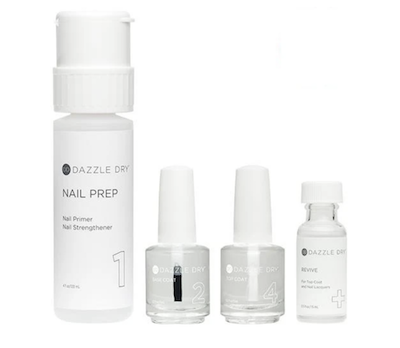
Each step of the system costs $12-20 dollars, and after reading rave reviews of the brand and their products, I decided upon “The System,” which is a bundle of all of the products you need for the results they promise. It included the nail prep, base coat, top coat, and “revive” which helps to maintain the integrity of the top coat and nail lacquer if they thicken or bubble over time. Their website offers 148 different shades of nail lacquer, and I was so overwhelmed by choices that *naturally* I settled for a clean looking, shade of white called “White Lightning” that I saw featured on one of their IG posts. The nail color was an additional $18, so I refrained from purchasing any more until I gave it the good ole’ college try.

I’ve spent an absurd amount of time in my life trying to find a home nail polish routine that would save me money/time at the nail salon, but my impatience and dissatisfaction towards my end result (AKA, watching my hard work chip away in 3-5 business days) left me frustrated. I’m not going to lie, I wasn’t expecting to be blown away by another brand that claimed a five-minute dry time and lasting results. 


I must say, I am so. pleasantly. surprised. I literally can’t believe I’m saying this, but it actually dries in less than five minutes, as promised. Even better than the quick dry time, I found that this polish lasts me two weeks without chipping. Unfortunately, it didn’t hold up to the three-week guarantee, but I blame washing my hands an absurd amount (hello flu season), ripping open packages in a pinch at work, and nervously picking at them for their inability to endure until that third week. Perhaps a bad habit to crush in 2021 …

Overall, I’m so pleasantly surprised by the quick-dry time, longevity, feel, and make-up of this product. Bravo, Dazzle Dry. Dare I say it? You ladies nailed it. 

The post I Tried This Quick-Dry Vegan Nail Polish—and Now I’ll Never Wear Anything Else appeared first on The Everygirl.

Ask any beauty enthusiast and they’ll tell you that they have easily stumbled across several trendy new hair vitamin brands on social media. Countless beauty influencers (and stars) such as James Charles, Vanessa Hudgens, and the Kardashian-Jenner clan, for example, haven’t been entirely shy about their love of hair gummies. 

And while the swan song of longer and stronger locks may be calling your name, it’s safe to say that hair gummies easily fall into the controversial category of celebrity-endorsed products.

Biotin supplementation, for example, was found to have some effect on hair and nail growth health, according to a 2017 review published in Skin Appendage Disorders. However, the review only reported 18 cases of biotin use for hair and nail changes, and in all of those, participants receiving biotin supplements had a deficiency or some sort of condition—meaning it’s important to remember that research on the topic is still limited. The review authors also came to the conclusion that there’s not enough evidence to suggest that otherwise healthy people should take a biotin supplement.

Should you be wanting to know all the pros and cons associated with hair gummies before you actually buy them, we talked to experts to shed some light on all the truths and myths associated with these products. 

From ingredients to look for to any potential health concerns you should know about, read on to get the full explainer on all things hair gummies. 


The packaging really isn’t that important

We all know that many hair gummies come in a pretty-packaged bottle, as tons of beauty brands have released bottles fit for all those #shelfies on Instagram. However, Samantha Coogan, MS, RDN, CSSD, LD, FAND, the director of the Didactic Program in Nutrition & Dietetics at the University of Nevada, Las Vegas, said via email that ingredients are far more important than packaging. 

To start, she explained that most gummy forms of hair vitamins have biotin and silicon (which enhances the absorption of biotin) as the main ingredients.

But in case you need the explainer as to what biotin does for your hair, according to the National Institutes of Health Office of Dietary Supplements, biotin is an essential nutrient found in foods and vitamin supplements. Biotin, according to the NIH, is a B vitamin that’s important for histone modifications, gene regulation, and cell signaling. 

And while the NIH did note that a few very small studies may suggest that biotin could promote healthy hair and nails, more research is needed. It’s also worth noting that individuals prescribed biotin supplements usually have a severe biotin deficiency. The NIH added that deficiencies can be marked by brittle nails, dry hair, and skin rashes. 

With that said, the NIH warned consumers that any benefits attached to gummies may actually just be claims when it comes to any perceived benefits for healthy individuals.

Biotin aside, Coogan added that other vitamins can be added to the product in order to hopefully boost the health of brittle hair and nails. These include vitamins C, A, E, B12, and thiamin. Should you be curious to know what thiamin is, the NIH defines it as a water-soluble B vitamin, known as vitamin B1. This vitamin, according to the NHS, plays a key role in supporting the growth, development, and function of cells. 

Additionally, Coogan added that this ingredient is considered safe for human consumption, as it carries daily requirements known as the Dietary Reference Intake (DRI) standards. “The DRI for thiamin is 1.1-1.2mg/day, and for biotin is 30mcg/day,” she explained. “It is important to be sure to look at the units carefully, as biotin has a much smaller requirement in micrograms versus thiamin, which is listed in milligrams.” 

Daily requirements are important, she explained, as they can prevent micronutrient deficiencies. For example, she explained that vitamin A deficiency can cause associated night blindness. Micronutrients, she added, act as precursors and coenzymes for metabolic processing in the body, including the metabolism of macronutrients (i.e. carbs, fat, and protein). Without micronutrients, Coogan warned, you can sacrifice the metabolic rate and functioning of the macronutrients and other crucial body processes related to cellular metabolism.


It’s probably more than just biotin

Coogan said it’s equally important to look for filler ingredients that can be included in hair gummy products. These include ingredients such as rice flour, and products that use terms such as ‘proprietary blend’, which often do nothing for your body, she added. 

“Rice flour is nothing more than a filler that has no health benefits to it,” she explained. “Similarly, ‘proprietary blend’ is a very loose term that doesn’t define exactly what’s in the product, and is a way for manufacturers to cover themselves legally, without truly divulging what that proprietary blend consists of.”

The ‘other ingredients section’ on your hair gummy bottle can also be revealing, as some gummy brands include things like titanium dioxide and FD&C Red40 in their product ingredients. FD&C Red 40, according to the Environmental Working Group, is a synthetic dye produced from petroleum, and is approved by the FDA to be used in food, pharmaceutical, and cosmetic products. Similarly, the EWG noted that titanium dioxide is an inorganic compound that can be used in things like makeup and sunscreen.  

When taking a closer look on how these ingredients are utilized in hair gummies, registered dietitian Summer Yule, RD, explained via email that both titanium dioxide and FD&C Red 40 are typically used as color additives that are permitted to be used in food, according to the FDA. Titanium dioxide may also be used in paper food packaging, she added. 

Though Yule said that both ingredients are approved by the FDA, titanium dioxide does have its share of potential risks, as a 2017 study published in the World Journal of Gastroenterology noted that the ingredient caused inflammation in the small intestine of mice. Similarly, a 2010 paper published in Environmental Health Perspectives noted that FD&C Red40 contains a low level of benzidine, a human and animal carcinogen. 


They’re not FDA-Approved

Authenticity is another problem surrounding hair gummies, as Coogan explained that the FDA isn’t authorized to review dietary supplements for safety and effectiveness. Instead, manufacturers and distributors of dietary supplements are responsible for making sure their products are safe before they go to market, according to the FDA website. 

If manufacturers fail to ensure that products are safe, the FDA website adds that the organization can pull supplements off the market. However, Coogan warned that this process doesn’t take over night, especially since it takes far longer than it does for a manufacturer to get it on the shelf. 

“Typically, the process to pull products from the shelves by the FDA takes far longer than it did for the manufacturer to get it on the shelf,” she said. Instead, she recommended exerting when it comes to supplements by talking to your physician first, before you actually take them. 

“In dietetics, we caution consumers about supplements on a ‘use at your own risk’ level,” she said. “We also always promote consulting a physician first, especially if you’re on any medications that may be contraindicated for supplement use.” 

Even if a brand does claim to use FDA-approved food ingredients, Coogan said it’s still important to exert caution, especially since manufacturers may try to include these ingredients to get around FDA-approval backlash from the public. Additionally, she noted that potential ingredient interactions could occur, making it important to take a cautionary approach to hair gummies.  

“This has the potential to be misleading because consumers will latch onto one FDA-approved ingredient,” she added. “However, without knowing the true interactions between the different ingredients, it is hard to assess for safety and efficacy, or to even have the capability to state that one ingredient is more effective than another.” 


Organic certifications have nothing to do with effectiveness

Even if your hair gummy of choice has a certified-organic seal slapped on the bottle, Coogan said that it doesn’t mean this product will help achieve your hair goals. 

“Organic is more about the handling of foods and food products versus any health benefit,” she explained. “It typically deals with the substances used in soil, free of pesticides and residues; or for meat and poultry, the quality of the diet they are fed.” 

And since everyone’s body responds differently to supplements, she added that it’s hard to say who will actually benefit from taking organic gummies, organic seal or no organic seal. “Organic doesn’t necessarily mean healthier, especially since it only really tends to drive the price up,” she added. “Instead, eating organic foods is more of a realistic approach to keep in mind.” 


Hair growth—if you see it—won’t happen immediately

Hair gummies also won’t work overnight, as board-certified hair restoration physician Dr. Alan Bauman, MD explained by email that hair growth is on the slow side, with a total of ¼ to ½ inch a month. 

With this in mind, it can take some time to results from hair growth supplements, as he explained that it takes up to six months to start seeing visible results, depending on the individual. You may notice shinier, healthier looking hair before that, he added, but it takes an investment of time to see actual growth. 

“If a hair vitamin actually had a good effect on your hair, you should be able to measure the results at the level of the scalp in 90 to 180 days, and see results in double that amount of time,” Bauman said. 

However, cosmetic chemist Susie Wang said via email that hair vitamins will only help in promoting new hair and nail growth, especially since hair is already ‘physiologically dead’ to begin with. “When hair grows out of the hair follicle and past your scalp, it’s physiologically dead,” she explained. “In short, it doesn’t have life anymore, as in nerves or blood and so on.”

Instead, Wang suggested remembering that hair gummies work to support new hair growth, which is why you should take them for a few months to see results. “The supplement doesn’t affect already existing hair growth, but only new and alive hair growth from your follicles,” she added. 


There are lots of factors to consider before trying them out for yourself

Although biotin-containing hair gummies may seem like an inexpensive way to give your nails a boost, the NIH pointed out that future studies are needed to determine whether biotin supplements might improve hair health, especially for those who don’t have a deficiency, which can’t be overlooked.

Additionally, Wang reminded that not all brands will work right for your body, and may not give you the instant results you are looking for. Since our bodies only need a certain amount of vitamins to maintain bodily health, she added that you may not need to take supplements like these after all. 

“If your body is already rich in vitamins, your body will just dispose of the excess and, in turn, you are just wasting the gummies you are taking,” Wang explained. 

Instead, Coogan advised focusing on making sure you are eating a balanced diet full of whole foods, as she explained that consuming biotin-rich foods (eggs, cheese, almonds, etc.) can support healthy hair, skin, and nails. Coogan also recommended consuming food products that contain collagen, like bone broth, since its an important protein that may help support healthy skin and joints, according to Cleveland Clinic. 

However, be advised that while a 2016 study published in Journal of the Science of Food and Agriculture did note ingestible collagen’s potentially positive effects on skin moisture and elasticity, there is still very limited research pertaining to collagen’s effect on hair growth at this time. More research is needed for how collagen might help boost your hair, skin, and nails.

In short, should you still be interested in taking any type of supplement, Coogan advised consulting a physician first before doing so. That way you can ensure that your gummies (or anything else) are safe for your body before you try them. “Doctors can assess for any potential adverse side effects or drug interactions, especially if someone is on a prescription medication,” she said. “They can also assess any potential allergic reactions people may have to the supplement.” 


Whole foods over supplements

Hair gummies may be a celebrity and influencer favorite, but there is limited published research at this time that suggests that the ingredients (biotin, collagen, etc.) inside these products have any positive effects on hair growth.

And though some of the more questionable ingredients inside these products are considered safe by the FDA, Yule stressed the importance of getting all your nutritional needs from eating whole foods instead. 

“Supplements may be more expensive than just buying food, plus the supplements may contain additives that you don’t want,” she explained. “Often, you don’t know how much of the additive you are getting, since this information is typically not provided on nutrition labels.” 

However, if you want to give hair gummies a try, that’s not necessarily bad. Just make sure to share any new supplements you may be interested in taking with your primary care physician before you actually take them. 


The post Do Those Celebrity-Endorsed Hair Vitamins Actually Work? Experts Weigh In on This Tricky Topic appeared first on The Everygirl.

The year was 2014. In the summer of Fancy by Iggy Azalea dominating the charts, a soon-to-be college junior was about to step foot into a salon, get fancy herself, and at last, color her hair for the very first time. 

After five long hours in the chair at what was possibly the quietest salon in Chicago, I walked out feeling extremely overwhelmed by what had just happened and how I felt about it. This was a time when ombré was all the rage and all my friends were getting gorgeous glow-ups with their new hair color to match the rare, perfect, season-long 80 degree weather. I had no idea what I wanted for myself and my hair color aside from the fact that I wanted to “go lighter” and a had a single blurry screenshot of Shailene Woodley to show for it.

Now, as common sense would dictate, that is not specific at all, and I really should have used my habit of obsessively researching everything for actually looking up various color techniques, sample photos, and stylist reviews before I showed up to a salon that I chose purely based on an online coupon (not one of my finest ideas, per se). Needless to say, I learned my lesson. There are definitely things that you need to know about the before, during, and after of coloring your hair for the first time when you’re considering it. Over the past five years since my incident, here is what I have discovered they are.


View this post on Instagram

Simple and easy style for any occasion 🤗 @mistermorristhesalon

A post shared by RACHEL SALIH (@hairbyrachel___) on


Before you color your hair for the first time


1. Research, Research, Research.

You can’t even know where to begin without using a scientific method approach to such an important undertaking. There are so many things to learn about and take into consideration when deciding to finally switch up your natural hair color. First off, take note of your current base color and texture. You can’t expect an icy, platinum blonde when you’re starting off with warm-toned dark brown tresses, and vice versa. Look up what are some realistic shades to take the first step into lightening or darkening your hair might be so that it still suits your warm or cool skin tone (and if you’re one of the lucky ones with a neutral skin tone, the world of hair color world may very well be your oyster)! Another important thing to study up on are the current hair color techniques being used by stylists. For example, if you want some lighter shades of strands without the monthly upkeep, opt for a hand-painted subtle balayage or an ombré. If you want an overall lightening and added dimension, babylights would be an amazing option. Read up on all the latest hair color trends and find the one that best suits you.

You may be asking at this point, “but how do I know what’s exactly right for me?” My answer will always be sample images. Sample images are going to be your absolute best friend in this whole process. My go-to ways of compiling collections of my obsessive, never-ending perfect hair color search are (a) keeping a hair-color board on Pinterest to refer back to and (b) using hashtags in the explore page on Instagram to bookmark images into a special collection in my account. Finding people who have similar skin tones and base colors as you will not only be of aid to you, but more importantly, your colorist in this process.


2. Find your perfect colorist.

A HUGE part of the research should also be finding the right hair colorist and salon for you. Word of mouth and experience with hair stylists in the past is always helpful, but in this day and age, a super convenient way to do so is through social media, like Instagram. Look up some hashtags that can be local to your area, such as #chicagobalayage, #chicagocolorist, or #chicagohair and you will see tons of colorists’ pages and salon geotags pop up. Using specific colorists’ images to gauge what kind of client hair they have the most experience with will be a very good indication as to how they could work with yours. 


3. Consultations.

Once you’re set and have picked your hair stylist, call or message them to ask if they do free consultations. I guarantee you, it is highly unlikely they’ll say “no” to that request, as it is in everyone’s best interest to have a little meet-up to chat about your hair before you spend all the time and money on doing the actual thing. Bring in your sample pictures to the meeting and ask them for their honest take on what is and isn’t realistic to achieve the results you expect. To get the color you want, it might take more than one session, leading to spending more money and time in the chair, which you may not be willing to commit to at the moment. Also, you are going to be spending an entire morning, afternoon, and/or evening with this person (depending on how drastic or complicated your color change is). You’ll definitely want to make sure that you vibe with your future colorist and feel the ability to trust your hair in their hands!


4. Hair prep is vital.

There are some responsibilities you will have before you arrive at the salon to ensure that your experience and hair are top notch. According to Byrdie, you should be sure to not shampoo your hair about 24 to 48 hours before your appointment to let the natural oils add a protective layer to your hair. LiveAbout adds that deep conditioning during your last wash before the salon is also going to help keep your hair in healthy shape before the color goes on your strands. Lastly, Seventeen suggests that to get all the unwanted buildup out of your hair, use a clarifying shampoo during your wash before the appointment and you’ll have the best blank canvas to work on.


The day of your appointment


1. Show up early.

It goes without saying that you obviously need to show up for your appointment, but showing up in the right way is key. Be on time, early if possible. Be excited, not nervous for this new adventure. Be on the same page as your colorist, and keep the communication going. DON’T BE dressed in your best outfit, though — unless you’re OK with some possible souvenir hair color splatters on it.


2. Beauty takes time.

Expect to be sitting in that chair for at least a couple of hours — even more if you have longer and/or thicker hair — and remember that patience and preparedness is key to optimizing your salon experience. I personally have learned the hard way to bring a snack and something to drink to a hair color appointment after having my stomach growl for about two hours straight. Additionally, as much as you’re vibing with your colorist in conversation, there will be periods of them having to concentrate on their work or having to step away for a bit, leaving you to your own devices (figuratively and literally). Make sure you have something to keep you entertained, such as a book, TV show, music, or even an accompanying friend if you are someone who finds themselves lost when not engaging in something (as I do).


After you color your hair for the first time…


1. It’s all about the maintenance.

So it happened! You gave it a shot and are now looking like the version of yourself that you’ve wanted to show off for a long time.

 But now for the most important part: maintenance. 

The most crucial step to making sure that coloring your hair for the first time is truly worth it is all in your hands after you step out of the salon. Before you pick up your classic bottle of shampoo and conditioner for your first hair wash after the salon, remember that some things have changed. According to Insider, your hair might change in texture and/or volume, and possibly even get a bit coarser due to the chemicals in the dyes (but the visual is SO worth it). Be sure that the slight damage that is inevitable is well taken care of by investing in some quality shampoos and conditioners designed specifically for colored strands. Today advises to look for indicators on shampoo bottles such as ‘sulfate free’ and alcohol free’ to help with slowing the fade of your color job, as most inexpensive, over-the-counter shampoos contain these as well as harsh detergents and salts. For conditioners, Good Housekeeping suggests to look for ingredients including silicones, amino acids, provitamins, plant oils, and minerals to help retain moisture, smoothness, and strength. Avoid any products that claim to be “suitable for all hair types,” since your hair is unique and cannot be generalized. You will also notice that with the new texture, you might even be able to skip a day or two more than before between washes. What a win-win!


2. Flaunt the **** out of it. 

You. Are. A. Fuhhhreaking. Ray. Of. Sunshine. Hopefully you’re really ~feeling yourself~ with this new hair, so snap all the selfies and share them everywhere to show everyone how amazing you look! Don’t be surprised when you have people left and right giving you compliments on the new color, and telling you that you look like a new you. In fact, they may even tell you that you look more like yourself than you did before. That’s what hair color is all about — letting your inner self and outer self connect and showcasing that to the world. Have fun playing around with different hairstyles, makeup looks, and wearing new colors in outfits that you might notice look amazing now. It’s the time to experiment and have fun!


The post What You Need to Know About Coloring Your Hair for the First Time appeared first on The Everygirl.

Let’s be real: I’m a busy and important business lady, so sometimes I just simply don’t have time to wash my hair. LOL JK. I usually want to skip washing my hair because I’m knee-deep in an 85-hour-long episode of The Bachelor and wild horses couldn’t tear me away.

In general, I want to extend my shampoo as far as possible for a few different reasons: I’m traveling and I don’t want to waste time re-styling my hair each day; my hair has been freshly cut and colored and I want to avoid over-shampooing; or my hair is feeling super dry and I want to keep some of the natural oils around for shine. To give you some background: my hair is fine (but there’s a lot of it), long, and wavy. Since my hair is naturally pretty dry and holds a curl well, I can make it a good while without needing a vigorous shampoo sesh. Below are a few of my tips for extending a wash. Your mileage may vary, based on your specific hair type. 


Start with really (really) clean hair

If you want to live the less-hair-washing-life (so much more time to sit on your bed in a towel after you shower, staring into space!), you have to start with the right canvas. For me, that means a specific regime and a shampoo that I know gets my hair really clean. So clean that a ponytail holder just slides right through it like water. So clean it’s rated G. So clean that Mr. Clean would be jealous. 

I always start with a good ol’ scalp massage, courtesy of this $7 tool from Amazon. Sometimes I’ll add a scalp scrub directly onto the massager for a fun remix. This lifts the nine pounds of dry shampoo that is coating my head. It also feels nice. 

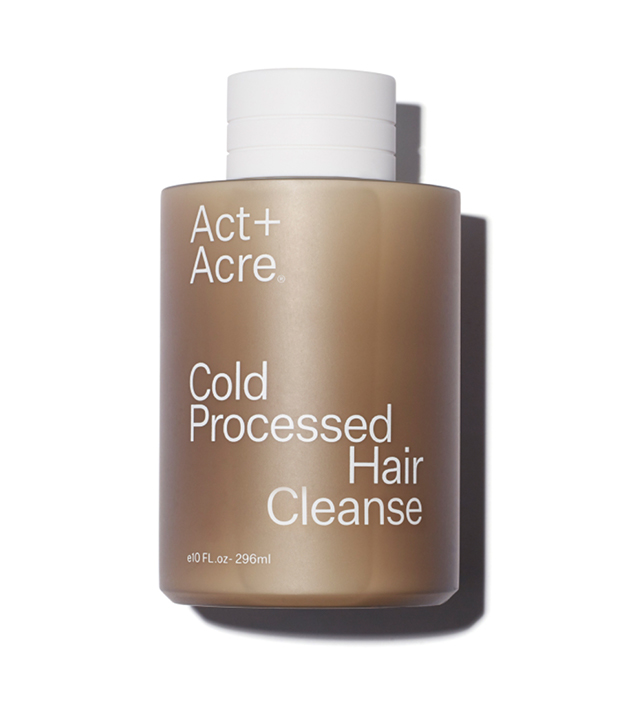
I follow up my scalp scrub with the Act+Acre Cold Processed Hair Cleanse. This stuff smells exactly like you’d think something called a “Cold Processed Hair Cleanse” would smell. Smelling this is what I imagine being a vegan feels like. I use it twice in a row, which is the only time in my life that I have ever followed the “lather, rinse, repeat” guidelines. The first use yields very little lather, while the second use is lather-city. Much like Dan Humphrey’s sideburns, I don’t have an explanation for this phenomenon. 


Note: I really only use the Act+Acre when I want to ensure I don’t have to wash my hair for a good, long while. On regular days or if my hair is especially greasy and needs a wash, I’ll use my normal, “everyday” shampoo. Here’s a peek into my current shower setup, in case you are deeply interested in me and my routines. I, for one, am obsessed with how other people live and am constantly peering into bags and cupboards. Invite me over!

After I shower, I wrap up my hair in an absorbing hair towel for about 15 minutes. Once my hair is 60-70 percent dry, I’ll use the Revlon One-Step Hair Dryer, which I have publicly declared my love for many a time. If I’ve showered in the evening, I’ll just scamper off to bed to read on my kindle until I fall asleep with it across my face like an introvert crime scene. If I’ve showered in the morning, I’m meeting with the Queen of England or it’s a weekend. In this case, I add waves to my hair with my straightener, which I bought at Target when I was 18 and is still going strong, and wear my hair down.


Tip: I don’t put any product in my hair on day one to ward off any oncoming greasiness. If my hair is looking especially poofy, I’ll add some hair lotion to the ends, but that’s it. 

Takeaways: 

  • Use a scalp scrub, scalp massager, or scalp mask to ensure a clean “canvas” for the week ahead 
  • Try a cleansing shampoo, designed to throughly clean the hair
  • Avoid adding any additional product to your scalp or the top half of your hair 


Always use a shower cap

As we all know, not washing your hair doesn’t mean not showering. If I routinely wasn’t showering for four days in my normal life, I’m pretty sure the other Everygirl editors would stage a hard-core intervention. 

One of the biggest things that will ruin a not-washing-my-hair streak is forgoing my shower cap. The steam and mist really frizzes my hair out and it becomes unsalvageable without a trip back to the drawing board. I like the idea of living the fancy shower cap life—very Princess Margaret, no? But I also wouldn’t say no to a classic Nana cap. Whatever gets the job done. 


Avoid touching the top of your head — with your hands or with product

My second-day hair looks pretty much the same as my OG style. Sometimes it looks better than my first-day hair because it has a little bit of grit to it, like a sequel that exceeds all expectations.

In the days after washing my hair, I try to avoid brushing through it too many times, because I don’t want to distribute any of my scalp oils down through the rest of my hair. I’ll usually do a brush-through once upon waking up and then only brush through the bottom half of the hair to the ends, if necessary, through the rest of the day. I also avoid putting any product on my scalp or the top of half of my hair, which is the section that will get greasier and greasier as the week goes on. 


Here’s comes the hard part: trying to avoid touching my hair in any way. I’m a fidgeter by nature (which is why I can’t wear rings or bracelets and will go after a hangnail like a crazed bull) so inevitably, I want to run my hands through my hair at every opportunity as if I were starring in a Pantene ad. I also touch my face a lot. I’m working through it, thanks for asking. The best way to avoid this is to make sure your hair is is out of your face. I like to do this by pinning my hair back on each side with bobby pins (simple, but effective), pulling it half up, or doing a mini bun and securing it with a french pin. 

Kristin Ess

French Pin Set

Takeaway: 

  • Don’t touch your hair!


Find the right dry shampoo

Have you ever ordered fries at Five Guys in that lil cup and the ones on the top are all bouncy and fresh and the ones in the bottom look like they’ve seen some things? This is basically the layers of my hair as the week goes on. The top layer is alright, and it could conceivably still be seen by the world without judgment. But lift up the top layer and the grease that is revealed could give even Tim Riggins pause. 

This is the point where I get some product involved, i.e., dry shampoo. I firmly believe that all dry shampoo is not created equal and recommend testing out as many as you can until you find the perfect formula that works for your hair type. I’m partial to the Living Proof Perfect Hair Day Dry Shampoo, which actually cleans my hair and may be a magic potion. I also really like the Hair By Sam McKnight Lazy Girl Dry Shampoo. These are both unfortunately pretty $$, but dry shampoo is my forever love and I’m not afraid to splurge on bae.

Hair By Sam McKnight

Lazy Girl Dry Shampoo

I recommend spraying dry shampoo sparingly at first and building up as you go, especially if you’re trying to get several days wear out of your hair. Too much dry shampoo always weighs my hair down and can make it feel a bit sticky or clumpy by the end of the day. I start by separating my hair and spraying the layers closer to my scalp first, since that is where the majority of the grease is hanging out. I spray once or twice, wait a minute, and then brush through the hair with a boar bristle brush (I only use this brush with dry shampoo), focusing on rubbing the brush back and forth at the top of the scalp to “blend” the shampoo. Think of it almost like teasing your hair—it’s a similar movement. Once I’ve hit the whole of my head, I’ll brush though it one last time to smooth everything out. Please enjoy this gif of me in my pajamas:


Olivia Garden

Boar Paddle Brush


Takeaways: 

  • Test dry shampoos until you find the right one for your hair type/texture
  • Designate a “dry shampoo only” brush 
  • Use your dry shampoo sparingly 


Add a dry conditioner 

The world of hair has come far since I was in middle school, where I would dump baby powder on my head to absorb the oil. My mom eventually made me stop because I was starting to look closer to 85 than 13. Now, not only are we blessed with dry shampoo, we also have dry conditioner. What a hair smorgasbord. 

I use dry conditioner when my hair is starting to get a little too crispy from the dry shampoo. I’ll spray the conditioner on the bottom half of my hair and brush through to restore some shine and joie de vivre to my locks. Welcome back, friends! 


Protect your hair while you sleep 

I’ve always had pretty long hair and one of my biggest pet peeves is rolling around on it while I sleep—you don’t know pain until you’ve trapped your hair beneath your body and then try to move your head. I also like keeping it tied back when I’m trying to extend my shampoo to keep it from frizzing out while I sleep. I do this by treating my hair like the luxurious lady it is and surrounding it with silk. I have a silk pillowcase and will often create a super high top bun to sleep in with a silk or satin scrunchie. Grease silk is the word. 


Embrace the texture

When I reach day three or four and I want to eek out just one more day, I let the texture of my hair lead the way. Grittier hair will hold like glue, so I can get last-all-day ponytails, buns, and braids. In these situations, I like to use a dry shampoo powder (rather than a mist) to go Extra GrittyTM. 


Conversely, I’ll also work with the slickness to create a more slicked-back look that I can’t normally achieve without enough hair gel to make 1999 Freddie Prinze Jr. jealous. I usually go for a high pony, because it gets all the greasy hair tamed (i.e., the hair on and around your scalp) and let’s the rest of your hair shine. 


I’m also a fan of this ‘do that I coped from Hilary Duff on an episode of Younger (my ultimate hairspiration). You do a deep part, and then pull all your hair to one side and bobby pin it in place right above your ear so it stays falling over one shoulder like a lil waterfall. A neat trick to work with the slick-y texture of more oily hair, while still wearing your hair down. 


Takeaways: 

  • Try a dry shampoo powder
  • Lean into your natural texture


The post How I Go 4 Days Without Washing My Hair appeared first on The Everygirl.

Author Name

Contact Form

Name

Email *

Message *